Learn why your thoughts can sometimes feel completely convincing — even when they don’t reflect the whole picture.
When Your Thoughts Feel Like Facts
“I know I’m going to mess this up.”
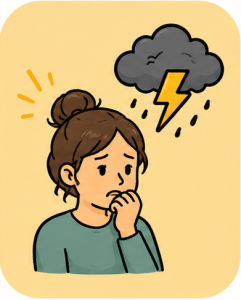
“They haven’t replied. I must have done something wrong.”
“I made one mistake — I’ve ruined everything.”
Sometimes a thought arrives so quickly and feels so convincing that we don’t stop to question it.
But a thought isn’t automatically a fact.
Psychologists sometimes describe these unhelpful patterns of thinking as cognitive distortions. They can affect how we interpret ourselves, other people and what’s happening around us.
The good news is that we can learn to notice these thoughts, question them and develop a more balanced way of responding.
Everything you need to know about executive function in less than a minute.
What is it?
A pattern of thinking where our interpretation of a situation may be more negative, extreme or certain than the evidence supports.
Why Does It Happen
Stress, anxiety, previous experiences, low confidence and strong emotions can all influence how we interpret situations.
What does it look like?
Expecting the worst, seeing things as all-or-nothing, assuming you know what someone else thinks or treating one setback as proof that you'll always fail.
What can help?
Notice the thought, pause, check the evidence and replace certainty with a more balanced explanation.
What Is Irrational Thinking?
Irrational thinking happens when our thoughts feel convincing, even though they may not accurately reflect what is happening.
These thoughts are sometimes called cognitive distortions. They can appear automatically, particularly when you are stressed, anxious, overwhelmed or worried about making a mistake.
You might find yourself thinking:
🧠 “I know this is going to go wrong.”
⚠️ “If I make one mistake, I’ve ruined everything.”
💭 “They didn’t reply. I must have upset them.”
🔁 “It happened before, so it will happen again.”
👀 “Everyone will notice if I get this wrong.”
🛡️ Handle setbacks with self-compassion
⭐ Trust yourself to solve problems
💡 Psychologist’s Tip
Don’t immediately ask, “How do I stop this thought?”
Instead, try:
“What evidence do I actually have that this thought is true?”
Creating that small gap between the thought and the evidence can make it easier to see the situation more clearly.
Why Does Irrational Thinking Happen?
💡 Psychologist’s Tip
Ask yourself: “What do I actually know — and what am I assuming?”
That small distinction can create enough space to consider other explanations.
Irrational thinking doesn’t mean that you’re being ridiculous or deliberately negative.
Often, your brain is trying to make sense of uncertainty quickly.
It takes the information available and creates an explanation. The difficulty is that our emotions, experiences and expectations can influence that explanation.
For example:
Your manager sends:
“Can we have a quick chat later?”
Your brain immediately responds:
“I’ve done something wrong.”
But that’s only one possible explanation.
The message itself doesn’t tell you why your manager wants to speak to you.
Learning to separate what you know from what your brain has added is an important part of challenging unhelpful thinking.
Does This Sound Familiar?
Irrational thoughts can appear so quickly that we often accept them before we’ve had a chance to question them.
Assuming the Worst
Something small happens and your mind immediately jumps to the worst possible outcome.
All-or-Nothing Thinking
Things feel either completely successful or a total failure, with very little room for anything in between.
One Thing Becomes Everything
One difficult experience starts to feel like proof that the same thing will always happen.
“I didn’t get that job. I’ll never get anywhere.”
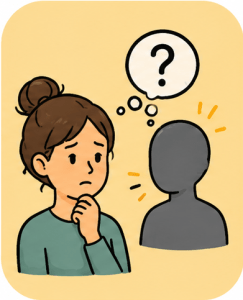
Mind Reading
You assume you know what someone else is thinking, usually without enough evidence.
“They were quiet with me. They must be annoyed.”
These thoughts can feel completely believable — but feeling true and being true are not always the same thing.
Challenge the Thought One Step at a Time
You don’t have to stop negative thoughts appearing. The aim is to learn how to question them before automatically believing them.
🔎 Check the evidence
Ask yourself:
“What evidence do I actually have that this thought is true?”
Look for facts rather than what you fear might happen.
↔️ Look for another explanation
There may be more than one reason something happened.
Instead of: “They didn’t reply because I’ve annoyed them.”
Try: “There could be lots of reasons they haven’t replied yet.”
🖼️ Zoom out
One difficult moment doesn’t tell you the whole story.
If something goes wrong, ask:
“What other people, circumstances or factors contributed to this?”
This can help reduce the tendency to blame yourself for everything.
⚖️ Replace extremes with something balanced
Watch for words such as always, never, everyone, nobody, disaster and failure.
Try replacing the extreme thought with one that better fits the evidence.
“I got this wrong” is very different from “I get everything wrong.”
🌱 Take one small action
Don’t wait until the thought disappears before doing something.
Take one manageable step while the uncertainty is still there.
Each time you do, you give your brain new evidence that the feared outcome isn’t inevitable.
💡 Psychologist’s Tip
Don’t try to replace every negative thought with a positive one.
If your brain doesn’t believe the new thought, it probably won’t help. Instead, aim for a thought that is more balanced and supported by the evidence.
For example:
Instead of: “I’m going to mess this up.”
Try: “I’m nervous about this, but I’ve handled difficult situations before.”
You’re not trying to convince yourself everything will be fine — you’re giving your brain a more realistic version of the story.
Ready to Make Everyday Life Easier?
Our ADHD Practical Toolkit (£19) contains printable planners, reminder systems, checklists and psychologist-designed resources to reduce working memory overload in everyday life.
Working alongside Dr Yates, Paul ensures that services are well organised, accessible and delivered with care.
Paul oversees client relationships and supports the smooth running and development of YPS, helping individuals, families and organisations feel confident and supported from first contact onwards.
Paul’s focus includes:
Building strong, steady client relationships
Ensuring services are clear and easy to navigate
Supporting the growth and stability of YPS creating welcoming experiences that feel calm and reassuring
Web development, and videography
He ensures that YPS remains grounded, responsive and is focused on helping people move forward with confidence.
Paul leads on client relationship management, service coordination and organisational development. Paul works closely with schools, families and partner organisations to ensure clarity of communication, timely delivery and high service standards.
He supports referral pathways, contractual arrangements and long-term partnership development, helping ensure services remain consistent, reliable and professionally delivered.
Outside of work, Paul’s main passion is Walking Football. He plays for East Devon, Devonshire County, and South West County. His biggest achievement is having trials with the Over 50s England Walking Football group in 2025. He also enjoys restoring and driving classic cars.
Joseph - Assistant Psychologist
BSc Hons in Tourism Management, Tourism, and Business Management, MSc Psychology Conversion, MSc Occupational Psychology
Working under the clinical supervision of Dr Yvonne Yates, Joseph supports the assessment and development of psychological services across the organisation.
Joseph’s work focuses on:
Supporting psychological assessment processes
Assisting in the preparation of structured reports
Contributing to the development of wellbeing and learning resources, and delivering training
Supporting data organisation and research-informed practice
Assisting with service delivery coordination
He has a strong interest in evidence-based psychology and values clarity, structure and ethical practice.
Outside of work, Joseph enjoys spending time with his springer spaniel, Willow, and going for long walks with her and the family. When he can, he hits the ski slopes on his snowboard, and he also likes ice-skating.
Dr Yates has specialist expertise in ADHD, depression, anxiety, learning differences (SpLD), and emotional wellbeing with children, young people, and adults.
She holds a Doctorate in Psychology (University of Manchester) and has extensive experience delivering:
• Educational psychology assessments, including ADHD and SpLD • Mental health assessment and therapy • Social skills and emotional regulation support
Dr Yates has worked in public organisations, including, schools, the NHS, and local authorities, and in private practice, for universities, colleges, and therapy healthcare bodies, such as, AXA PPP and Bupa.
She is the author of Human Givens Therapy with Adolescents (Jessica Kingsley Publishers) and has published peer-reviewed research on adolescent wellbeing.
Her approach combines evidence-based psychology with practical, real-life strategies that help individuals feel calmer, more confident, and better equipped to succeed at school, university, and work.
Outside of work, Dr Yates is an avid crocheter and is also quite partial to silent discos. She looks forward to spending evenings by the fire, and watching movies with the family whilst creating her latest crochet piece.